Vinyl Plank and Laminate Flooring Mistakes That Can Cause Buckling or Gaps
Vinyl plank and laminate flooring can buckle or develop gaps when the subfloor is uneven, the floor lacks movement space, or installation conditions are wrong. At HomeRemodelSnoqualmie.info, we check the subfloor, product fit, room conditions, and joints before installing flooring.
Request an EstimateWhy Vinyl Plank and Laminate Floors Buckle or Develop Gaps
Vinyl plank flooring and laminate flooring buckle or develop gaps when movement, moisture, subfloor condition, or joint alignment isn't properly managed.
A floating floor isn't fastened across the entire surface. The planks must stay supported while allowing expansion and contraction. Subfloor movement, trapped moisture, and poor seams can turn small installation mistakes into raised planks or separated joints.
Floor buckling often shows as raised edges, lifted rows, or soft areas. Floor gaps may appear between planks, near walls, or at end joints.
The Installation Mistakes That Create Flooring Problems
Each flooring installation mistake creates a different symptom and repair path. The table below connects the visible problem with its likely cause and practical correction.
Repair difficulty depends on how far the problem has spread. Material damage, blocked edges, moisture, and subfloor work can all increase the repair scope.
| Installation mistake | Visible symptom | Likely cause | Repair difficulty | Corrective action |
|---|---|---|---|---|
| Uneven subfloor | Movement, raised areas, or visible lows | Low spots, high spots, or shifting material | Moderate to extensive | Level, reinforce, or replace affected subfloor areas |
| Poor cleaning and preparation | Rocking planks or open joints | Dust, debris, adhesive, or loose material | Limited to moderate | Clean, scrape, secure, and prepare the surface |
| Missing expansion space | Buckled rows or pressure at walls | Edges trapped by walls, jambs, or cabinets | Moderate | Restore perimeter clearance and reset affected planks |
| Poor acclimation | Gaps or tight joints after installation | Product movement from room conditions | Moderate | Review product instructions and reset the layout |
| Moisture under flooring | Swelling, lifting, odor, or damaged seams | Leaks, damp concrete, or trapped moisture | Extensive when damage spreads | Find the source, dry the assembly, and replace damaged material |
| Damaged locking joints | Separated or lifted plank edges | Forced joints, impact, or wrong tools | Limited to moderate | Replace damaged planks and correct the joining method |
| Poor seam layout | Repeating lines or weak end joints | Short offsets or repeated joint alignment | Moderate | Rework the affected rows and improve the staggered pattern |
| Wrong or missing underlayment | Noise, movement, or joint stress | Poor support or missing moisture control | Moderate to extensive | Use the approved underlayment and rebuild affected areas |
| Floor pinned by fixed objects | Buckling near cabinets or islands | Floating floor movement blocked | Moderate to extensive | Restore movement space and adjust the installation |
Our team uses the symptom as a starting point, then checks the entire flooring system. A visible gap can come from a joint, a moving subfloor, or blocked perimeter clearance.
Installing Over an Uneven Subfloor
An uneven subfloor can make flooring move, flex, and separate at the joints.
Low spots leave unsupported areas, while high spots push against planks. That uneven surface can stress the click-lock system and create visible highs and lows.
Repair cost drivers include the size of the affected area, subfloor damage, leveling needs, and whether flooring must be removed. We inspect the surface, correct unstable areas, and confirm the floor is ready before installation.
Skipping Subfloor Cleaning and Preparation
Subfloor debris can keep planks from sitting flat and can weaken the floor assembly.
Dust, adhesive residue, loose material, and small ridges can create rocking points. Those points place stress on seams whenever the floor receives foot traffic.
Repair cost drivers include surface condition, adhesive removal, loose sections, and the amount of floor that needs to be reset. We clean, scrape, secure, and prepare the surface before laying new material.
Leaving Out Expansion Space at the Edges
An expansion gap gives floating flooring room to move at walls, door jambs, cabinets, and baseboards.
Temperature and humidity changes can make planks expand. When the edges are trapped, pressure can push rows upward or force joints apart.
Repair cost drivers include blocked edges, trim removal, cabinet contact, and the number of planks affected. We check perimeter clearance and reset edges where movement has been restricted.
Installing Flooring Before It Adjusts to the Room
Acclimation lets vinyl plank flooring and laminate flooring adjust to room temperature and humidity before installation.
Each product has its own installation instructions. Ignoring those instructions can allow product movement after the planks are joined.
Repair cost drivers include the product type, room conditions, damaged joints, and whether the layout must be rebuilt. We review the manufacturer requirements and assess the room before installation.
Allowing Moisture Under Laminate or Vinyl Planks
Moisture under laminate or vinyl planks can lift flooring, damage seams, and create a mold risk.
Water leaks, damp concrete, and trapped moisture can affect the subfloor and the flooring above it. Laminate swelling often shows at plank edges, while vinyl may lift or lose joint strength.
Repair cost drivers include the moisture source, drying needs, damaged subfloor, and material replacement. We use moisture testing to guide the repair and address the source before rebuilding the floor.
Forcing or Damaging the Locking Joints
Damaged locking joints can cause separated planks, raised edges, and repeat joint failure.
Click-lock joints need the correct angle, alignment, and installation tools. Force can chip plank edges or deform the locking mechanism.
Repair cost drivers include the number of damaged planks, product availability, and access to the affected area. We replace damaged pieces and correct the joining method before closing the floor.
Staggering Seams Poorly or Repeating Joint Lines
Poor seam layout can create weak end joints and repeating lines across the floor.
A staggered pattern spreads end joints across the installation. Repeated alignment can make a row less stable and can draw attention to gaps between planks.
Repair cost drivers include the affected rows, usable existing material, and the amount of rework needed. We plan the floor layout before cutting and keep the plank alignment consistent.
Using the Wrong Underlayment or Skipping It
Underlayment supports floor stability, sound control, and moisture management when the product requires it.
Some flooring has attached underlayment, while other products need a separate layer. The wrong material can interfere with joints or fail to meet manufacturer requirements.
Repair cost drivers include removal, replacement material, moisture barrier needs, and the condition of the subfloor below. We match underlayment installation to the product instructions and room conditions.
Pinning the Floor Under Fixed Objects
Fixed cabinets, islands, and heavy fixtures can block a floating floor from moving.
Floor movement needs a clear path around fixed objects. When planks are trapped beneath them, expansion can create buckling or joint pressure.
Repair cost drivers include access around the object, trim removal, damaged planks, and the required floor layout changes. We identify fixed points before installation and preserve movement space around them.
Can Vinyl Plank Flooring Go Over an Uneven Subfloor?
Vinyl plank flooring shouldn't cover an uneven subfloor without suitable preparation because movement can damage joints and create visible highs and lows.
Subfloor tolerance depends on the product and its installation instructions. Low spots may need correction, and high spots may need removal or smoothing.
Our team checks the surface for movement, uneven areas, and weak sections before recommending floor preparation. The best repair depends on whether the problem is surface variation, subfloor damage, or both.
Why Flooring Needs Room to Move
A floating floor needs room to expand and contract because temperature and humidity changes can press planks against walls or separate joints.
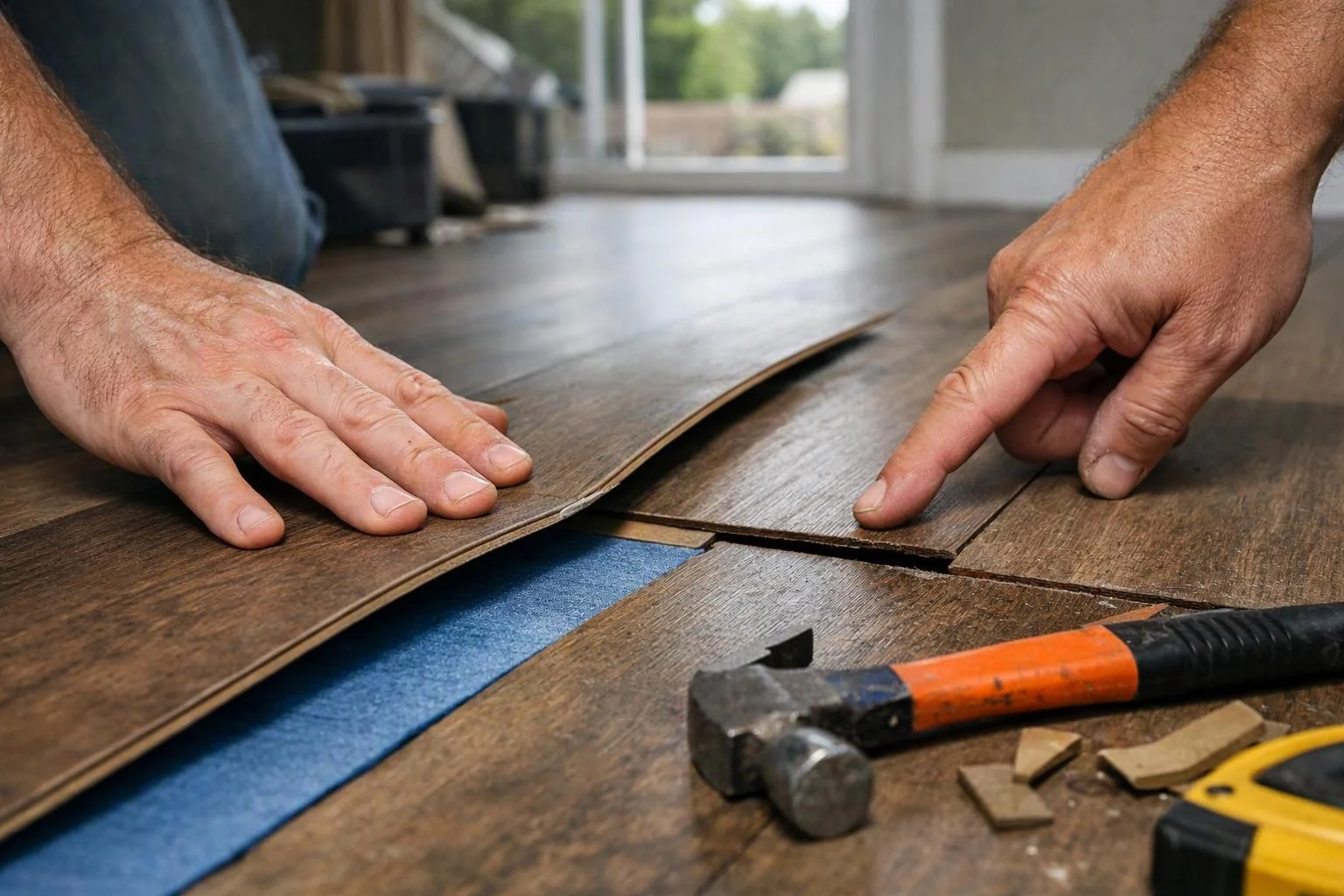
The perimeter gap provides wall clearance around the installation. Door jambs, baseboards, cabinets, and islands must also allow the floor to move without pinching it.
When movement space is missing, the floor can buckle. When the subfloor or joints move too much, gaps between planks can appear.
How We Check a Floor Before Installation
Our team checks the full flooring system before starting installation.
This process helps us connect the product to the room and the subfloor. Our approach supports both Vinyl Plank Flooring Installation and Laminate Floor Installation.
When to Call HomeRemodelSnoqualmie.info for Flooring Help
You should call us when the flooring problem may involve the subfloor, moisture, or damaged joints.
We inspect the cause before recommending repair or replacement. Removing planks without checking the full assembly can hide the problem and lead to repeat damage.
What a Flooring Repair or Installation Quote Should Cover
A flooring quote should explain the subfloor preparation, material condition, removal needs, and installation scope.
Our quote review considers whether existing flooring must be removed, whether the subfloor needs work, and whether the material is suitable for the room. We also identify the repair scope when only part of the floor is affected.
Cost drivers include access, moisture control, surface preparation, damaged material, trim work, and the final floor layout. You can request a project review through our flooring consultation so we can assess the actual conditions.
For homeowners planning a larger remodel, the same planning principle applies to other spaces. Kitchen Remodeling Mistakes That Can Make the Finished Room Harder to Use and Bathroom Remodeling Mistakes That Can Lead to Water Problems and Rework also often begin with overlooked preparation.
Choose the Right Installation Approach for Your Floor
The right installation approach depends on the flooring product, subfloor condition, moisture control, expansion space, and floor layout.
Vinyl plank flooring installation may require different surface preparation and underlayment decisions than laminate floor installation. Product instructions should guide acclimation, joint handling, and perimeter clearance.
We match the installation plan to the room instead of treating every floor the same. Our team checks the subfloor, controls moisture risks, protects movement space, and builds a layout that supports stable joints.
For more details about our service, see Vinyl Plank Flooring Installation.
Questions About Buckled and Gapped Flooring
What should I check first when laminate flooring starts separating?
Laminate flooring that starts separating should first be checked for moisture, blocked edges, uneven support, and damaged locking joints. Our team then checks whether the gaps follow a seam pattern or occur near walls and fixed objects.
Can moisture cause vinyl plank flooring to lift?
Yes, moisture can cause vinyl plank flooring to lift, lose joint strength, or move over a damaged subfloor. We locate the moisture source, check the affected materials, and plan the repair around the condition below the floor.
How can I tell whether flooring gaps come from installation or movement?
Flooring gaps may come from installation when joints, acclimation, seam layout, or subfloor preparation were handled poorly. Gaps may come from movement when they appear near blocked edges, change with room conditions, or follow subfloor movement.
Should damaged locking joints be repaired or replaced?
Damaged locking joints should usually be replaced when the locking edge no longer holds securely. Our team checks the surrounding planks and the cause of the damage before deciding whether a localized repair is suitable.
Related Resources
Kitchen Remodeling Mistakes That Can Make the Finished Room Harder to Use
What to AvoidBathroom Remodeling Mistakes That Can Lead to Water Problems and Rework
What to AvoidRoof Leak Warning Signs and When Repeated Repairs May Not Be Enough
What to AvoidBasement Moisture Problems to Address Before Remodeling