Deck Warning Signs That May Point to More Than Surface Wear
Deck repair warning signs include soft boards, loose rails, shifting posts, and repeated damage. HomeRemodelSnoqualmie.info checks the visible symptom and the deck components behind it before recommending repair, staining, or rebuilding.
Request an EstimateHow Can You Tell When Deck Wear Needs More Than Staining?
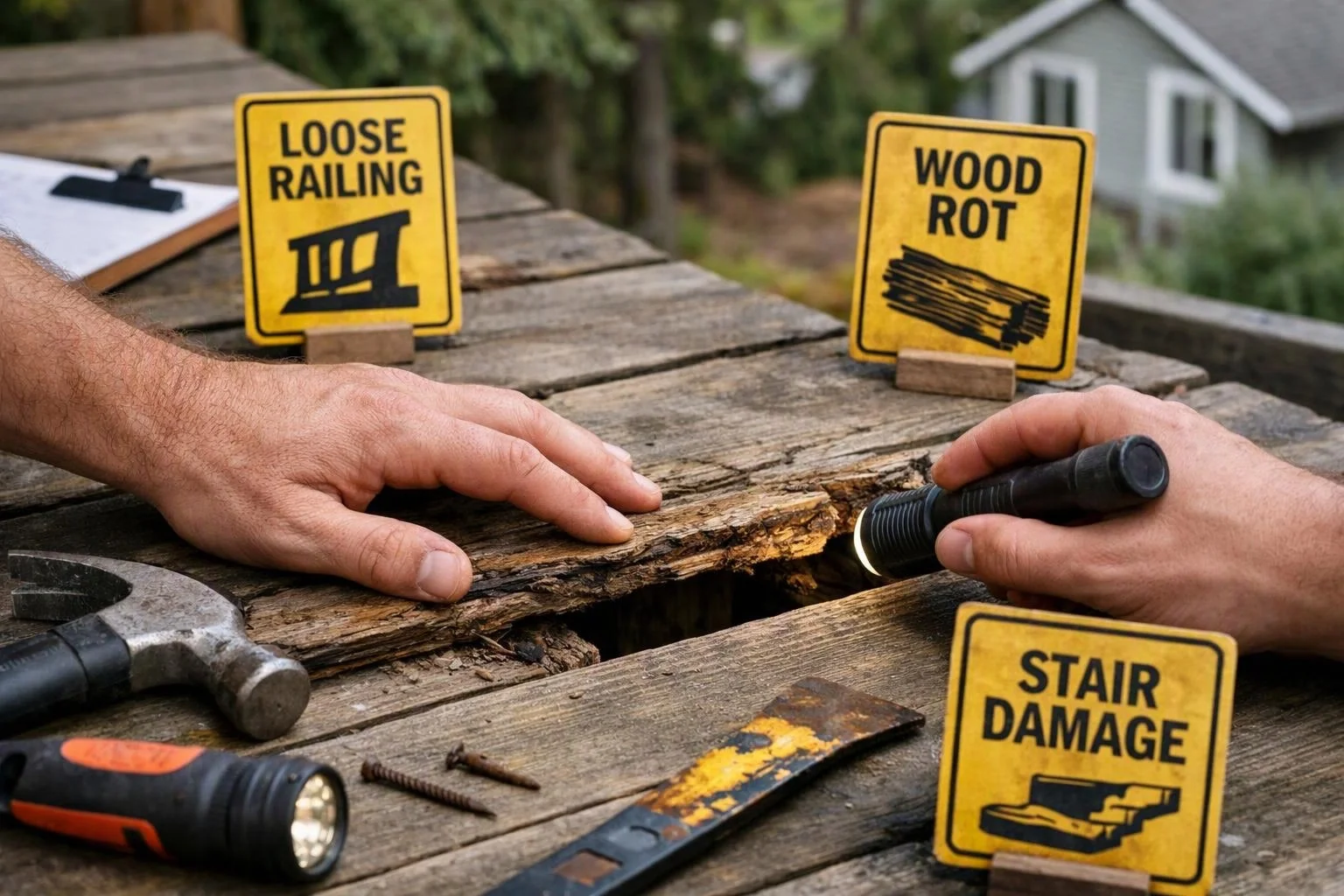
Deck repair is needed when damage affects the wood, connections, support posts, stairs, or railing stability.
A deck surface with fading or light surface wear may only need cleaning and deck staining. Soft wood, movement, open joints, and unstable parts point to deeper concerns. Staining can improve appearance, but it can't restore damaged wood or loose structural connections.
We connect the visible problem to the component below it. Our team can explain whether the repair is limited, whether hidden damage is present, or whether deck construction is the safer project scope.
For a focused review of these concerns, see our Deck Repair service.
Deck Warning Signs That Can Point to Hidden Damage
Deck warning signs can indicate underlying deck damage that may require repair or reconstruction.
Visible defects can begin in the deck boards and extend into joists, beams, the ledger board, or support posts. Railings and deck stairs can also expose connection problems that aren't obvious from the main surface.
Moisture, poor drainage, wood movement, corrosion, and settlement can work together. We check how each part supports the next before we define the repair scope.
Soft or Spongy Deck Boards
Soft wood or spongy boards often indicate moisture damage and wood rot below the finished surface.
Water enters through cracks, end grain, fastener holes, or worn finish. Wood decay can spread into nearby boards and the joists that support them.
The cost impact depends on how far the damage reaches, how much board replacement is needed, and whether the framing is affected. Our fix may include removing damaged boards, checking the joists, improving drainage, and restoring the surface.
Cracked, Split, or Cupped Boards
Cracked, split, or cupped deck boards show wood movement or surface damage that can worsen around fasteners.
Repeated wetting and drying can change board shape. Missing or loose fasteners can let boards move and hold water against the framing.
The repair scope depends on the number of affected boards and the condition of the supporting joists. We replace unsafe boards, correct connection problems, and address moisture paths before applying finish work.
Loose or Wobbly Deck Railings
A loose railing can indicate weak railing posts, failed connections, or movement in the deck framing.
Railings provide fall protection, so movement deserves prompt attention. A loose post may be fastened to damaged wood or connected without enough support.
Repair cost depends on the railing section, post condition, access, and hidden damage. We check the posts and connections, then secure or replace the affected parts so the railing transfers force properly.
Swaying, Leaning, or Shifting Deck Posts
Swaying or leaning support posts can indicate movement at the post bases, footings, or deck framing.
Lateral movement may come from settlement, moisture damage, weak connections, or changes around the footing. The visible post may not be the only damaged part.
The repair scope depends on the footing, post base, beam connection, and access below the deck. We trace the movement through the framing and recommend a repair that restores stable support.
Sagging Areas or Uneven Deck Surfaces
A sagging deck or uneven surface can indicate damaged joists, beams, support posts, or deck settlement.
Boards may appear uneven when the framing below has shifted. Water damage, settlement, overloaded connections, or failing support points can all affect the deck plane.
The cost depends on the damaged framing and the work needed to reach it. We check the joists, beams, posts, and support points before we decide whether localized repair or replacement fits the condition.
Rusting, Missing, or Backing-Out Fasteners
Rusted, missing, or backing-out fasteners can weaken framing connections and allow deck parts to move.
Moisture causes corrosion, while wood movement can loosen screws and nails. Corroded metal connectors may also lose strength where beams, joists, and posts meet.
The repair scope depends on the fastener type, connection condition, and surrounding wood. We replace failed hardware, check the connected members, and repair damaged framing when needed.
Water Pooling or Staining Near Connections
Water pooling or staining near connections can indicate poor drainage, moisture intrusion, damaged flashing, or wood decay.
The ledger board is especially important because it connects the deck to the building. Failed or missing flashing can let water reach the ledger and nearby framing.
The cost depends on the hidden deterioration and the access needed to correct it. We trace the water path, check the ledger and flashing, remove damaged material, and improve drainage where the design allows.
Stairs That Move, Bounce, or Separate
Moving or separating deck stairs can indicate weak stringers, loose stair connections, damaged treads, or unstable support points.
Stair movement changes how weight transfers through the stringers and framing. Loose handrails can add another fall risk, even when the treads look sound.
The repair scope depends on the stringers, stair treads, handrails, and connections. We inspect the stair assembly and repair or replace the parts that cannot provide stable access.
Repeated Repairs in the Same Deck Area
Repeated repairs in one deck area often suggest recurring moisture, movement, or hidden framing damage.
Replacing the visible board may not solve the problem when water reaches the same joint or support. Repair history helps us identify patterns that a single surface repair can miss.
The cost depends on the full repair scope, access, and whether deck replacement is more practical. We review the recurring damage, inspect the framing, and explain which repair addresses the source.
What Each Warning Sign Can Cost You if Ignored
Ignored deck warning signs can increase the repair scope by allowing moisture, movement, or decay to spread.
Exact cost depends on the damaged components and the work needed to reach them. Our estimate separates visible repairs from hidden damage, materials, labor, access, and finish work.
| Warning sign | Possible hidden concern | What changes the repair scope | Typical direction of the fix |
|---|---|---|---|
| Soft boards | Wood rot in boards or joists | Depth of decay and access | Board or framing replacement |
| Loose railing | Weak posts or connections | Railing length and post condition | Connection repair or railing replacement |
| Swaying posts | Footing, post base, or framing movement | Support condition and work access | Support or framing repair |
| Water staining | Ledger, flashing, or moisture intrusion | Hidden decay and drainage path | Moisture correction and damaged wood repair |
| Repeated repairs | Recurring moisture or framing failure | Repair history and deterioration | Larger repair or replacement |
How We Check Whether Deck Damage Is Only Surface Deep
Our inspection connects the visible deck problem to the framing and connections below it.
We use a structured review so the repair scope reflects the actual condition, not only the first damaged board.
When Should You Call HomeRemodelSnoqualmie.info?
Call our team when deck movement, soft wood, or unstable access makes the deck unsafe to use.
Keep people off areas that move or feel weak until we can assess them. Structural deck work can involve elevated access and load-bearing connections, so our crew should handle conditions beyond safe homeowner maintenance.
How We Decide Between Deck Repair, Staining, and Construction
We choose deck repair when the damaged parts are limited and the remaining structure is sound.
Deck staining fits surface wear when the wood remains solid and the connections remain stable. Staining doesn't correct wood rot, movement, failed flashing, or weak framing.
Deck construction may fit when deterioration is widespread or the existing structure can't support a dependable repair. We compare the repairable damage with the full project scope and explain why we recommend one path.
What Changes the Cost of Repairing These Deck Warning Signs?
Deck repair cost depends on the damaged components, hidden deterioration, materials, access, and finish work included in the quote.
Damaged boards may need a smaller repair than failing joists, beams, posts, footings, or a ledger board. Hidden moisture damage can expand the work after the surface is opened.
Material selection affects the replacement work and final finish. Tight access can also affect labor because it changes how our crew reaches the framing and removes damaged parts.
We build the quote around the actual repair scope. Our team explains what we found, what the work includes, and which finish choices remain available.