
What Is Window Flashing?
Window flashing is a water-shedding material installed around a window opening. The flashing directs rain away from the window frame and wall assembly. It works with the window flange, sill, jambs, and head to limit leaks. Proper placement helps protect insulation, framing, trim, and interior finishes from moisture damage.
Quick Facts About Window Flashing
Category
Window water-management component
Used for
Directing water away from wall openings
Common confusion
Flashing and caulking serve different roles
Also called
Window Weatherproofing, Window weather flashing
Often discussed with
Window Replacement
Key Takeaways About Window Flashing
- Flashing forms a drainage path around the window.
- Layering matters at the sill, sides, and head.
- Flashing is not the same as caulking.
How Window Flashing Works

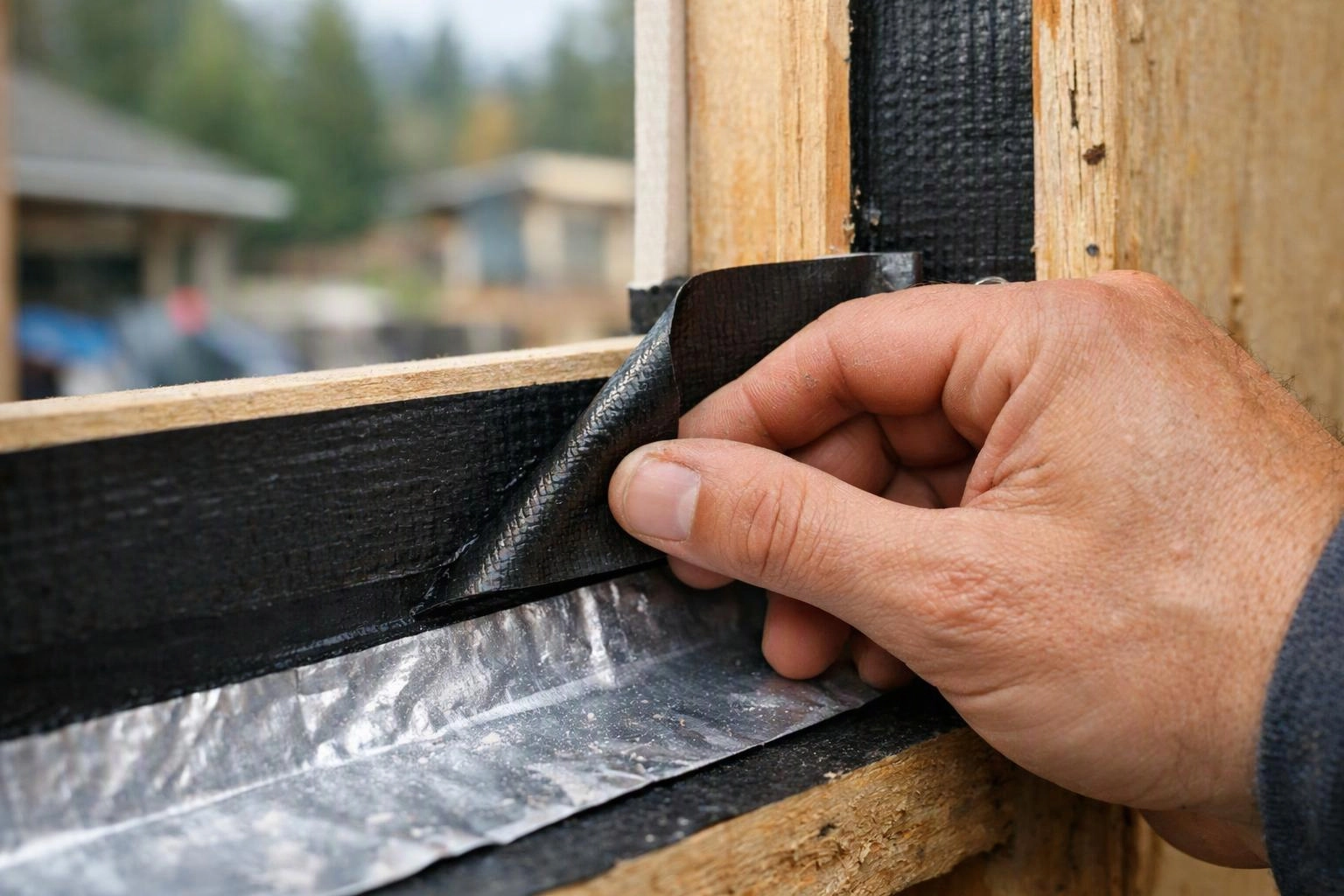
Window flashing creates a planned path for water around a window opening. Installers place flashing at the sill, along the sides, and above the window. Each layer overlaps the next so water moves outward and downward.
Related glossary terms: Flashing, Rough Opening, Moisture Barrier.
The window frame and wall layers must work together. A sill pan or sill flashing catches water that reaches the bottom of the opening. Side and head flashing guide that water toward the exterior. Weather-resistant barriers and exterior trim help complete the drainage path.
Caulking seals selected joints, but it does not replace flashing. Caulk can wear, crack, or separate from a surface. Flashing provides a shaped drainage layer that continues working behind the visible trim.
Expert Note
When we replace a window, we inspect the opening for damaged materials and check how water will leave the wall. We install or repair flashing in layers, then confirm that the window, weather barrier, trim, and sealant work together.
Window Flashing in Practice: A Real-World Example
During a window replacement, the sill may receive a pan or flexible flashing before the new unit is set. Side and head flashing then overlap the sill layer so water moves toward the exterior wall surface.
Related Services
Related Terms
Flashing
Flashing is a thin, shaped material that directs water away from roof joints, wall edges, chimneys…
Rough Opening
A rough opening is the framed space in a wall that receives a window or door…
Moisture Barrier
A Moisture Barrier is a material or layer that limits water vapor and liquid water from…
Waterproofing
Waterproofing is the process of keeping water from entering or damaging a building area. It uses…
HomeRemodelSnoqualmie.info
Have Questions About Window Flashing?
Contact HomeRemodelSnoqualmie.info for practical guidance on Window Flashing and related general contractor work in Snoqualmie.