
What Is Efflorescence?
Efflorescence is a white, powdery salt deposit that forms on masonry or concrete when moisture carries dissolved minerals to the surface. The water evaporates and leaves the salts behind. It often appears on basement walls, floors, and foundations. Efflorescence does not usually damage the material by itself, but it signals moisture movement.
Quick Facts About Efflorescence
Category
Masonry moisture symptom
Used for
Identifying moisture movement
Common confusion
Mistaken for mold
Also called
Salt Deposits, Mineral deposits
Often discussed with
Basement Remodeling
Key Takeaways About Efflorescence
- Efflorescence looks chalky and usually brushes away.
- The deposit points to moisture moving through masonry.
- It isn't the same as mold or structural cracking.
How Efflorescence Works
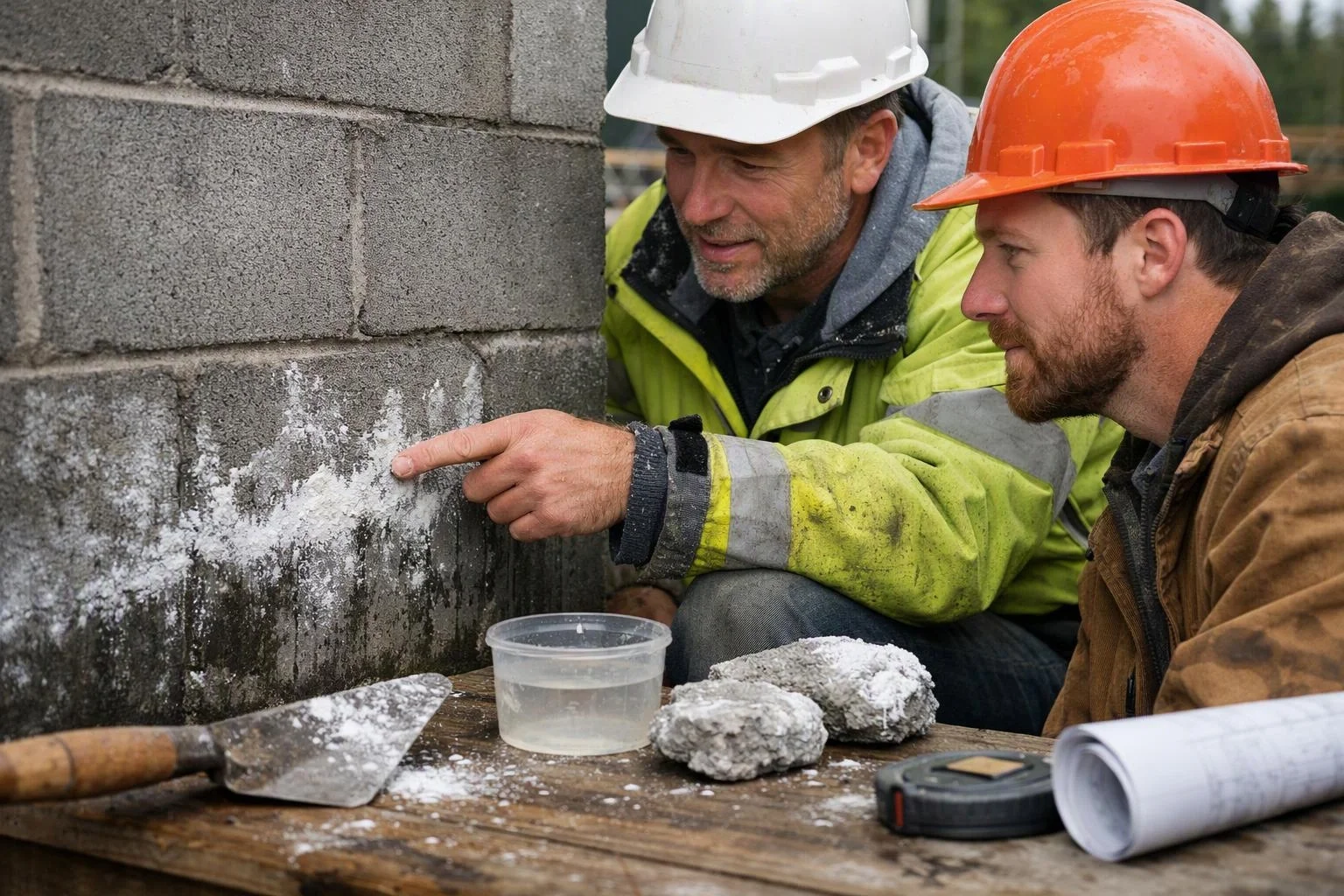
Efflorescence forms as water travels through porous concrete, brick, or mortar. The water carries dissolved salts from the building material. When the water reaches a drier surface and evaporates, the salts remain as a pale, crusty deposit.
Related glossary terms: Moisture Barrier, Waterproofing, Grout.
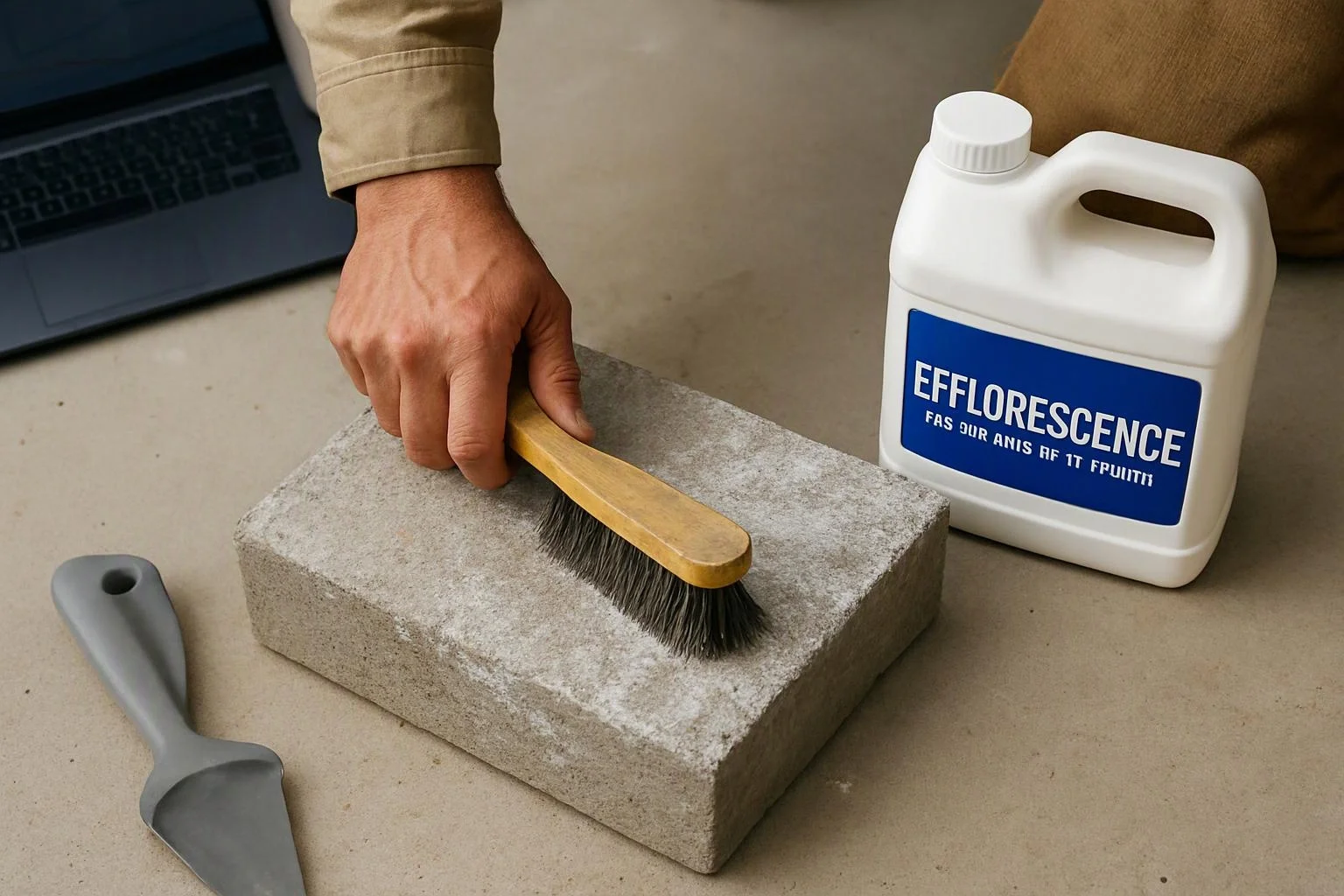
Basement walls may show deposits after damp weather or water entry. A dry brush can often remove loose residue, but cleaning does not address the moisture path. Inspectors look at the deposit's location, direction, and return pattern. They may also check nearby drainage, cracks, joints, or a moisture barrier.
Efflorescence can appear after repairs that change how water moves through a wall. Waterproofing work should account for the source and route of that moisture.
Expert Note
When we find efflorescence during basement remodeling, we map where the deposits appear and inspect nearby joints, cracks, and drainage paths. We clean loose residue only after considering the moisture source. Our team also checks whether planned finishes could hide future moisture movement.
Efflorescence in Practice: A Real-World Example
A basement concrete wall may develop a pale, dusty band after damp weather. During remodeling, the wall surface is inspected for cracks and moisture paths before paint, paneling, or other finishes cover it.
Related Services
Related Terms
Moisture Barrier
A Moisture Barrier is a material or layer that limits water vapor and liquid water from…
Waterproofing
Waterproofing is the process of keeping water from entering or damaging a building area. It uses…
Grout
Grout is a cement-based or resin-based material that fills the joints between tiles. It helps hold…
Flashing
Flashing is a thin, shaped material that directs water away from roof joints, wall edges, chimneys…
HomeRemodelSnoqualmie.info
Have Questions About Efflorescence?
Contact HomeRemodelSnoqualmie.info for practical guidance on Efflorescence and related general contractor work in Snoqualmie.