What exterior paints protect siding from weather damage?
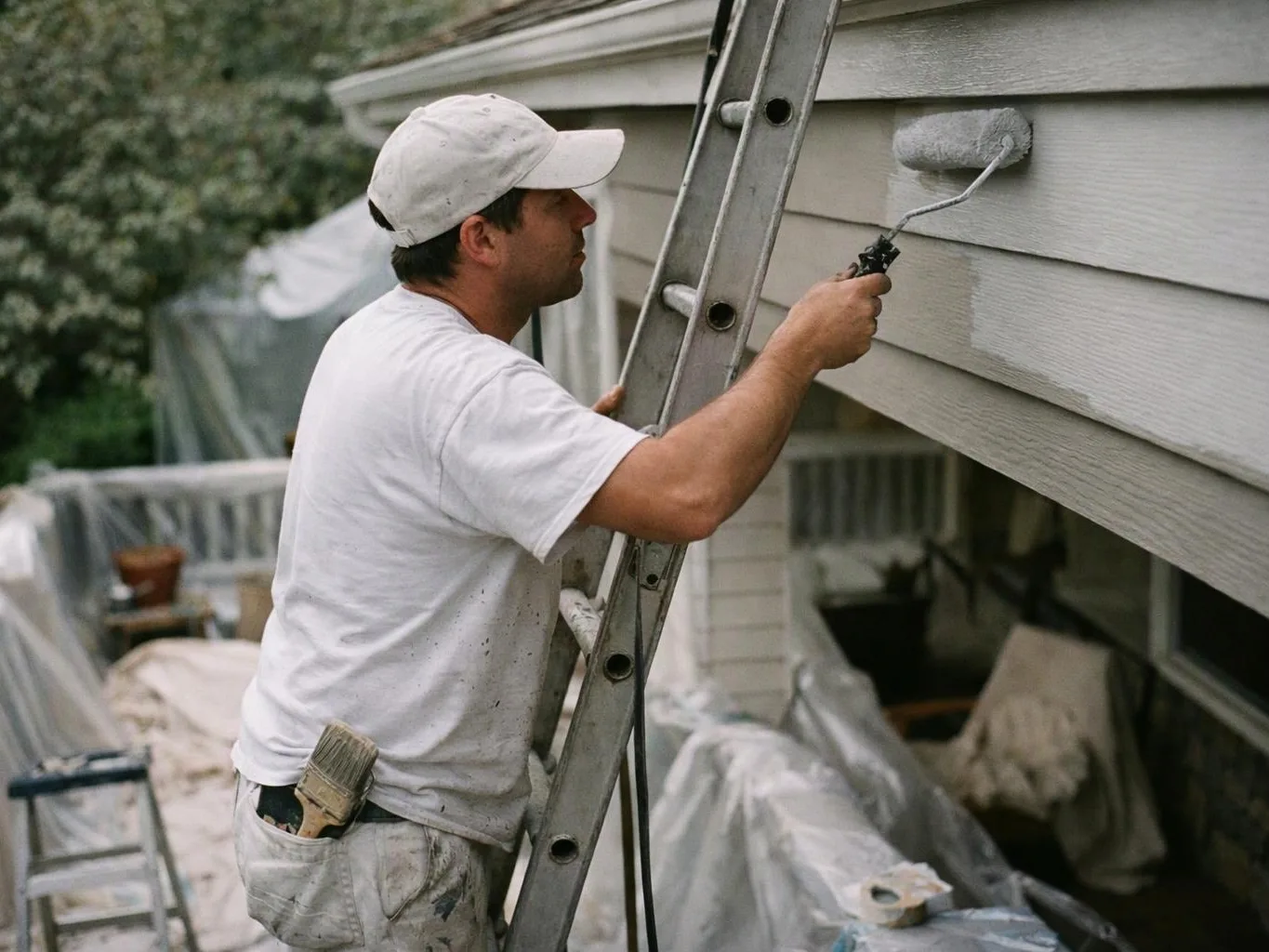
Elastomeric coating can protect suitable siding from weather exposure when the surface is prepared correctly. The coating must match the siding material and existing finish. We also review cracks, loose paint, moisture signs, and caulk before selecting the system. A different primer or acrylic finish may fit better when the surface needs flexibility, adhesion, or color retention.
How does the first exterior inspection shape the quote?
The inspection identifies preparation, repair, access, and coating needs before the quote is set. We check siding, trim, masonry, doors, existing paint, stains, cracks, and loose areas. Those findings decide whether the scope includes scraping, sanding, caulking, primer, or related repairs. The quote should show these parts clearly.
Which surface problems should be repaired before painting?
Rotten wood, loose siding, active moisture, failed caulk, and unstable paint should be addressed before finish coats. Paint cannot restore damaged material or stop an active leak. We separate repair work from painting so the property owner can make an informed scope decision. Some repairs may require a related construction trade.
When should I request an exterior painting assessment?
Request an assessment when siding or trim shows peeling, chalking, fading, cracking, stains, or uneven wear. Early review helps separate normal finish renewal from deeper surface damage. The assessment also covers access, nearby fixtures, doors, and the existing coating. This gives you a clearer basis for requesting a quote.
Why can two paint quotes describe different work?
Two quotes can differ because preparation, repairs, materials, access, and coated surfaces may not match. One scope may include trim, primer, caulk, and masonry, while another covers siding only. Compare the written surface list and preparation steps before comparing the total. A clear scope makes the decision easier.
What should I prepare before requesting a painting quote?
A property owner should list the surfaces, visible damage, access limits, finish goals, and any related remodeling work. Photos can help explain peeling, stains, cracks, and worn trim before the site discussion. Keep questions about color, primer, coating type, protection, and repairs together. We can then shape the quote around the actual exterior.
How do I know whether painting or another repair comes first?
Painting comes first only when the exterior is sound, dry, and ready for coating. Active leaks, structural decay, unsafe access, or loose materials require assessment before paint work. We explain which condition controls the scope and which related trade may be needed. That keeps the finish plan tied to the property's actual condition.